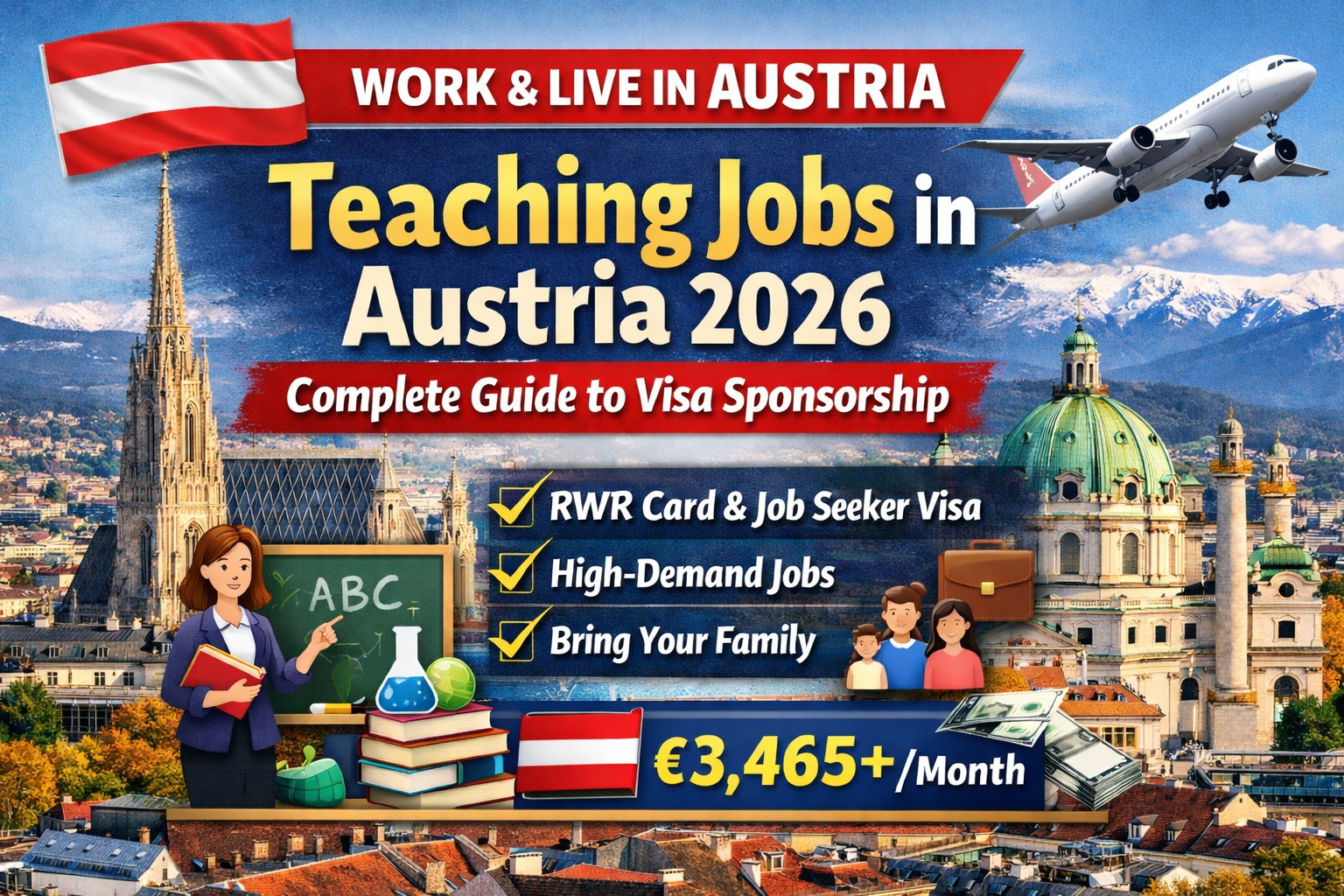
Austria is globally renowned for its breathtaking valleys and high educational standards. In 2026, the Austrian education sector has seen a record increase in demand for foreign teachers—especially specialists in English, Science, and Mathematics (STEM). If you are a qualified teacher dreaming of working in the heart of Europe, visa sponsorship can turn that dream into reality.
In this guide, we cover everything from the Red-White-Red (RWR) Card to the applying at the top educational institutions in the Austria.
Table of Contents
1. Austria’s Immigration System and Visa Types (2026)
To work in Austria, non-EU citizens must go through a points-based immigration system.
Red-White-Red (RWR) Card
This is the most important visa category. It allows both employment and residence in Austria. Most teachers fall under the “Other Key Workers” category.
- Points requirement: At least 55 points, based on age, education, work experience, and the language skills (English/German).
- Minimum salary (2026): Approximately €3,465 gross per month (including bonuses).
Job Seeker Visa (Category D)
If you do not yet have a job offer but a score 70+ points, you can apply for the a 6-month job seeker visa to the enter Austria and look for work.
2. The Job Search Keywords and the In-Demand Positions
Using the right keywords can make the a big difference in how well your job search goes:
- English Language Trainer: Private schools and adult education
- Native-Level English Teacher: There is a high demand for this in the international schools.
- STEM/MINT Teacher: There aren’t enough maths, IT, and science teachers.
- Kindergartens and preschools are where early childhood educators work.
3. Educational Background and a Registration (Nostrification)
Austria has a strict process for recognising credentials:
- A bachelor’s degree is required to sponsor a visa.
- TEFL/CELTA: You need a 120-hour certificate to teach English.
- Nostrification (Nostrifizierung): If you want to the teach in a public school, is the Austrian Ministry of Education must recognise your foreign degree.
- German Language: If you teach in English, having a German A1/A2 certificate will give you more RWR card points.
4. Pay and Other Benefits
One of the best things about working in Austria is that it has a strong social security system and benefits:
- 13th and 14th salary: You get double pay twice a year, in June and December.
- Klimaticket: A lot of schools give out free public transport passes.
- Paid time off: 5 weeks of paid vacation each year, plus holidays
- Average salary: €2,400 to €3,800, depending on your skills and experience.
Also read:Nursing and Medical Jobs in Russia 2026: Visa Sponsorship Guide
5. Best Schools and Programs That Sponsor Visas
These schools are well-known for the hiring teachers from other countries:
- International Schools: AMADEUS International School and the Vienna International School
- Berlitz Austria and the British Council are the two language schools.
- Special Programs: Fulbright Austria (USTA), especially for teachers who the help others
6. Five Important Steps to Success
- Before you apply, check the points calculator on the official website.
- Update your CV to show off your QTS or international experience.
- Use the right platforms, like Karriere.at and LinkedIn with the right filters.
- The employer must show that no EU citizen is available for the job in the AMS labour market test.
- Get ready for interviews by focusing on how you teach and how you run your classroom.
Questions That Are Often Asked (FAQs)
Q: Is it possible to teach in Austria without knowing German?
A: Yes, language schools and international schools teach in English. But speaking German helps with visa points.
Q: Can I bring my family along?
A: Yes. RWR card holders can bring their family (spouse and children) with them, and their partners can work in Austria.
Disclaimer: This job information is shared for educational and informational purposes only. Please verify all details from the official employer or the official government website before applying