Table of Contents
Are you tired of private jobs that are not stable? In 2026, finding a government job is mostly done online. It is now easier to apply, but many people are trying to get these jobs. Whether you want a permanent job (BPS) or a high-paying project job (PPS), you need a digital plan to succeed.
This guide shows you how to find jobs, use the National Job Portal (NJP), and pass the new tests to get your name on the final list.
1. Identifying the Right Government Job Portals in 2026
You do not need to look at paper newspapers anymore. In 2026, the government puts all jobs on special websites.
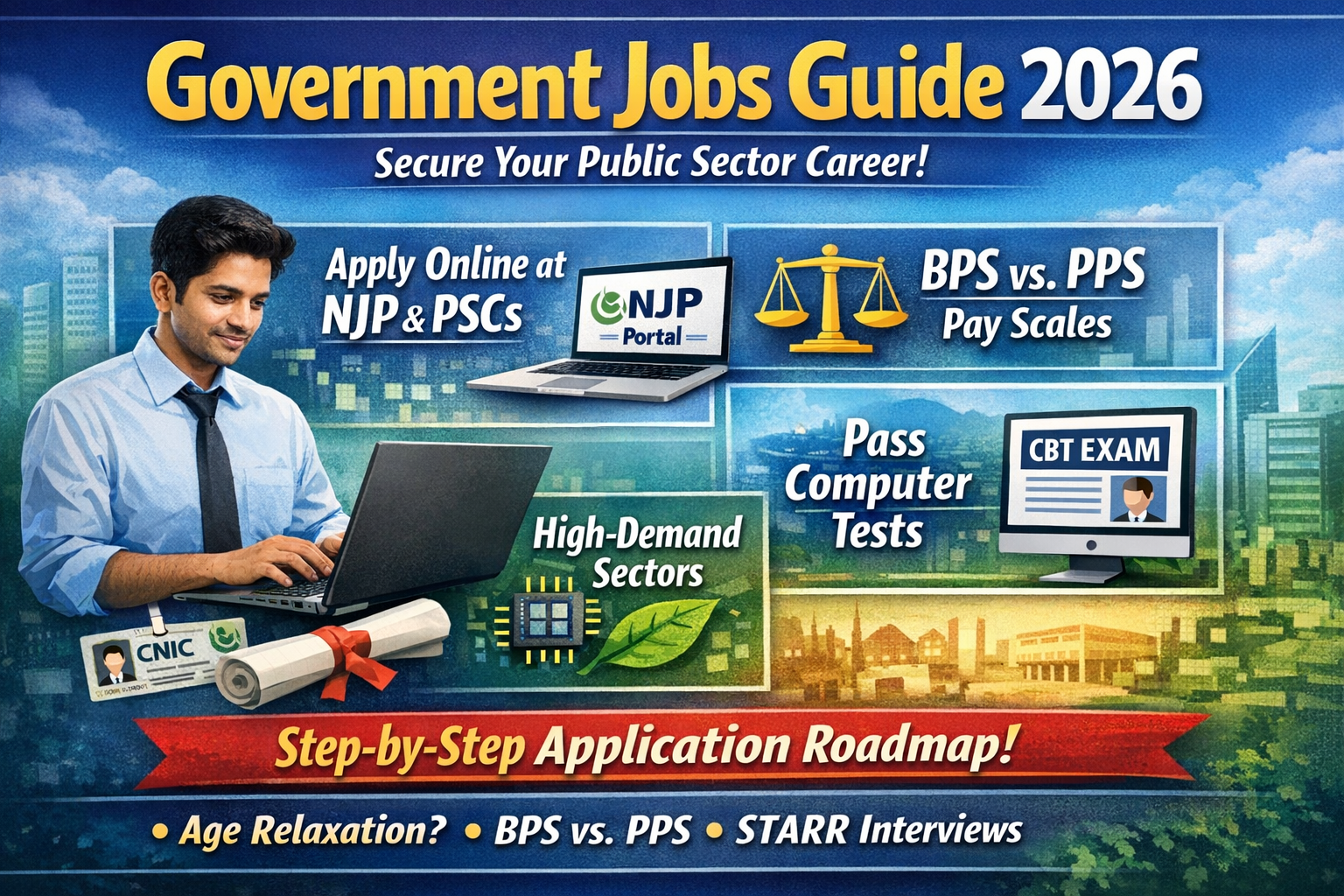
The National Job Portal (NJP)
The NJP is the main website for all federal (central) government jobs.
- CV Builder: It has a tool to help you make your profile. This helps the government’s computer system find your application easily.
Public Service Commissions (FPSC, PPSC, SPSC, BPSC)
For officer-level jobs, you must check these official websites:
- FPSC: For federal officer jobs (BPS-16 and higher).
- Provincial (PPSC/SPSC/BPSC): For jobs in your own province (like Punjab or Sindh).
Rolling Recruitment vs. Hard Deadlines
In 2026, many jobs stay open for a long time. This is called Rolling Recruitment. High-tech departments keep looking for talent all year. Check the “Upcoming Jobs” section often so you are ready before everyone else.
2. Understanding Pay Scales: BPS vs. PPS
Before you apply, you should know how is the salary works.
- Basic Pay Scale (BPS): These are permanent jobs. A BPS-17 job is the starting level for officers. These the jobs give you a pension (money after you retire) and the job security.
- Project Pay Scale (PPS): These are contract jobs for special projects. For example, PPS-6 to PPS-10.
- Salary: These often pay much higher monthly salaries than BPS jobs.
- Note: They usually do not have a pension.
3. High-Demand Government Sectors in the 2026
The government is hiring a lot of the people in the these “Future-Proof” areas:
- E-Governance & IT: They need a software developers and the data experts to the make government services digital.
- Environment: They need scientists and a energy experts for the new “green” projects.
- Urban Development: They need planners to help build new “Smart Cities” in 2026.
- Public Health: They still need many health experts and assistants.
4. The Step-by-Step Application Roadmap
Step 1: Digital Identity & Domicile Verification
Make sure your ID card (CNIC) and Domicile papers are verified online. The job websites check this automatically. If your data is old, the system might reject you.
Step 2: Building Your Profile
Register on the candidate dashboard. Upload your degrees and work certificates. Use the website’s CV Builder instead of your own PDF file. This is the help the government’s filters read your skills better.
Step 3: Navigating the Quota System
Jobs are divided into different groups. Pick the right one for a you:
- Merit: Open to everyone.
- Provincial Quotas: Reserved for people from Punjab, Sindh, KPK, or Balochistan.
- Reserved Seats: Special seats for women, minorities, and people with disabilities.
5. Mastering the Screening: CBT and the STARR Method
In 2026, most tests are done on a computer (Computer-Based Testing or CBT).
The Roll No Slip
This is your digital ticket to the exam. You can download it from your online dashboard 7 to 10 days before the test.
Also read:Spain Scholarship for International Students 2026: Full Guide
The STARR Interview Method
If you pass the test, you will have an interview. Use the STARR Method to answer questions with a good story:
- S (Situation): What happened?
- T (Task): What was your job or goal?
- A (Action): What did you do exactly?
- R (Result): What was the good outcome?
- R (Reflection): What did you learn?
6. Technical Compliance & Onboarding
If you are chosen for the job, there are a few more steps:
- Probation: You will usually work for the1 year on the a trial basis first.
- Asset Declaration: You must list what the you own (like property or cars) for transparency.
- Digital Signature (QES): You will likely sign your job offer on the computer to the make it faster.
Frequently Asked Questions (FAQs)
Q: Can I apply for the government job if the I am over the age limit?
A: Yes, check for Age Relaxation. Sometimes people get 5 to 15 extra years if they were in the army or already worked for the government.
Q: What is a “Non-Gazetted” role?
A: These are support jobs (BPS-1 to BPS-15). They are not “Officer” roles, but they still have full government benefits.
Q: How do I know if my application was successful?
A: You can track your status on your online dashboard. The final results are always published as a Final Evaluation Report.
Disclaimer: This job information is shared for educational and informational purposes only. Please verify all details from the official employer or the official government website before applying