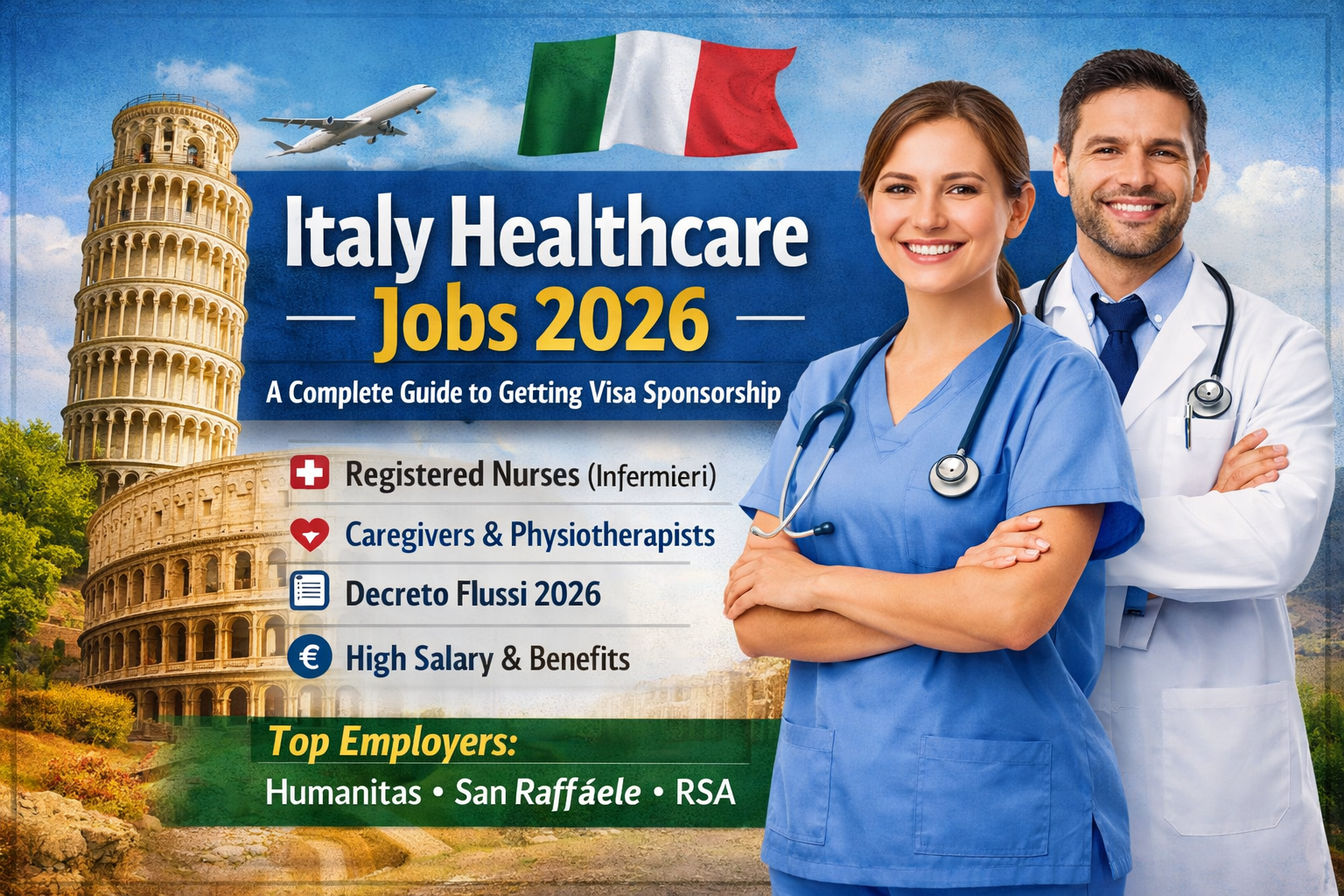
Italy is globally renowned for the its excellent medical facilities and its strong focus on elderly care. In 2026, the Italian government has further simplified visa procedures for non-EU citizens to address is the severe staff shortages in its healthcare sector. If you are an the experienced nurse, physiotherapist, or caregiver, Italy is offering golden opportunities for you.
In this guide, we explain Decreto Flussi 2026 and all the legal and professional steps required to the secure a job in Italy’s healthcare sector.
Table of Contents
1. Jobs in the Italian healthcare sector that are in high demand
When looking for jobs, it’s important to the know these specific Italian words:
- Registered Nurse: Infermiere
- OSS (Operatore Socio Sanitario): Carer or Social Health Worker
- Medico Specialista: Doctor with a speciality
- Physiotherapist: Fisioterapista
- Assistente Domiciliare: Home Care Assistant
2. Visa and the Law: Decreto Flussi 2026
Italy uses a quota system called the Decreto Flussi to hire foreign workers.
Important Steps for Applying:
- Nulla Osta is a “Certificate of No Impediment” (work authorisation) that your Italian employer got from the immigration office.
- Visto per Lavoro Subordinato: After you get the a approval, you need to go to the Italian embassy in your home country and apply for a long-term work visa (Type D).
- Permesso di Soggiorno: You must apply for the a residence permit within 8 days of arriving in Italy.
- Quota System: In 2026, thousands of a positions have been the specifically allocated for a healthcare and the a family care sectors.
3. Professional Registration and the Importance of the Language Skills
Healthcare professions in the Italy are strictly regulated.
- Riconoscimento Titoli Esteri: Official recognition of the your foreign degree by the Italian Ministry of the Health.
- Albo Professionale (FNOPI): Mandatory professional registration for the nurses.
- Dichiarazione di Valore: A certificate issued by a the embassy confirming the academic value of the your degree.
Language Requirements:
- Caregivers: Italian A2/B1 level
- Nurses: Italian B2 levelThese levels are essential for the effective communication with the patients.
Also read:Teaching Jobs in Austria 2026: Complete Guide to Visa Sponsorship
4. Salary, Benefits, and Top Sponsors
Healthcare workers’ rights in the Italy are protected under the the CCNL (National Collective Labor Agreement).
| Position | Monthly Salary (Gross) | Additional Benefits |
| Registered Nurse | €2,000 – €3,800 | 13th salary + paid leave |
| Caregiver (OSS) | €1,400 – €1,900 | Accommodation (sometimes) |
| Physiotherapist | €2,200 – €3,200 | Social insurance |
Top Sponsors and Employers:
- Private Groups: Humanitas and San Raffaele hospitals actively recruit international talent.
- Social Cooperatives: These organizations manage the elderly care homes (RSA) and are the largest sponsors of a caregivers.
- Regions with Most Vacancies: Lombardy (Milan), Lazio (Rome), and Veneto.
5. Successful Application Strategy
- Prepare Documentation: Translate your credentials into Italian and the obtain CIMEA certification.
- Learn the Language: Italian language skills are a single most important success factor.
- Networking: Contact HR departments of the Italian hospitals directly.
Frequently Asked Questions (FAQs)
Q: Is degree recognition mandatory for nursing jobs in the Italy?
A: Yes. Without Riconoscimento, you cannot practice as a nurse in a Italy. However, the process is relatively simpler for caregivers (OSS).
Q: What is “Tredicesima”?
A: It is the legally mandated “13th-month salary” in Italy, usually paid as the a bonus in December during the Christmas season.
Disclaimer: This job information is shared for educational and informational purposes only. Please verify all details from the official employer or the official government website before applying