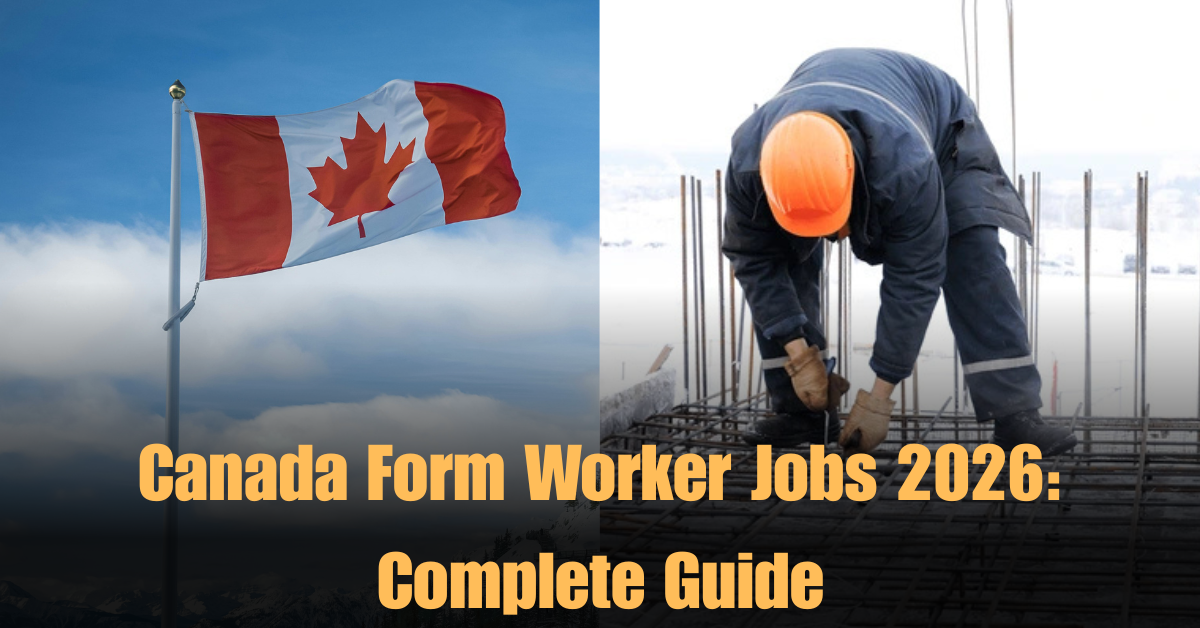
Are you a skilled tradesperson looking to build a future in one of the world’s most stable economies? With Canada’s 2026 immigration targets focusing heavily on the construction sector, there has never been a better time to search for form worker jobs in Canada with visa sponsorship.The Canadian construction industry is a projected to require over 111,000 new workers by 2034 to keep up with housing and infrastructure demands. Whether you are a Shuttering Carpenter or a Concrete Formworker, Canadian employers are actively looking abroad to fill critical gaps using the Temporary Foreign Worker Program (TFWP) and LMIA-approved pathways.
Table of Contents
Why Canada is Hiring Form Workers in 2026
Canada is currently facing a “double challenge”: an aging workforce reaching retirement and a massive surge in infrastructure projects, including high-rise residential buildings and AI data centers. To combat this, the federal government has prioritized the Express Entry Trades Category, making it easier for foreign formworkers to transition to Permanent Residency (PR).
Top 2026 Sponsoring Employers
Several “Accredited” and major construction firms are known for hiring international talent:
- PCL Construction
- EllisDon
- Ledcor Group
- Maple Reinders
- Brenta Construction Inc.
- Jacob Bros Construction
High-Demand Roles and Specializations
“Form worker” is a broad term. In Canada, you will find better success by applying for specific titles that align with the National Occupational Classification (NOC).
1. Engineered Formwork Specialist
Employers are seeking experts in high-efficiency systems. Mentioning experience with Doka, Peri, Aluma, or Skydeck on your resume can significantly increase your chances of sponsorship.
2. Formwork Carpenter / Shuttering Carpenter
These roles involve reading blueprints and creating the molds for concrete structures like shear walls, columns, and suspended slabs.
3. Concrete Lead Hand & Foreman
If you have 5+ years of experience, you may qualify for supervisory roles which often come with higher wage brackets and faster PR pathways via Provincial Nominee Programs (PNP).
Understanding Visa Sponsorship & LMIA
To work in Canada as a foreigner, you generally need a job offer from an employer who has secured a Labour Market Impact Assessment (LMIA).
- LMIA Approved: This document proves the employer couldn’t find a Canadian to do the job.
- Job Token: Once approved, the employer gives you a unique link or code to apply for your work permit.
- Median Wage Requirement: For 2026, many construction trades require a median wage of approximately $30.00 – $35.00 CAD per hour, depending on the province (e.g., BC and Ontario typically pay higher).
Step-by-Step Guide to Applying from Overseas
- Prepare a Canadian-Style Resume: Highlight your technical skills (e.g., layout & leveling, rebar coordination) and safety certifications like WHMIS 2015 or Fall Protection.
- Verify Your Credentials: Use the NZQA or equivalent assessment if required, though many trade roles rely on verified years of experience (usually 2+ years).
- Search Targeted Job Boards: Use filters for “Sponsorship” on Job Bank Canada, Indeed Canada, and Seek.
- Language Proficiency: While trade roles have lower requirements than office jobs, an IELTS score of 4.0 – 5.0 is often necessary for the AEWV or Express Entry routes.
Salary Outlook: What to Expect in 2026
Construction wages in Canada are competitive and often include comprehensive benefits like dental care and RRSP (Pension) matching.
| Province | Entry Level (Hourly) | Experienced (Hourly) |
| British Columbia | $26.00 | $42.00+ |
| Ontario | $25.50 | $40.00+ |
| Alberta | $24.00 | $38.00+ |
Also read:Computer Operator Jobs In Newzealand With Visa Sponsorship Guide 2026
Safety and Compliance
Canada has some of the strictest safety regulations in the world. To be “job-ready,” familiarize yourself with:
- CSTS (Construction Safety Training System)
- AWP (Aerial Work Platform) operations
- Blueprint Reading for complex engineered systems
Frequently Asked Questions (FAQs)
Q1: Can I move to Canada with my family as a formworker?
Yes. Most Temporary Foreign Worker permits allow you to bring your spouse (who may get an open work permit) and children.
Q2: How long does the visa process take in 2026?
LMIA processing times vary, but once you have a positive LMIA, work permit processing usually takes 8 to 16 weeks.
Q3: Do I need a degree to be a formworker in Canada?
No. Most roles require a high school diploma and proven apprenticeship or 2-3 years of relevant work experience.
Disclaimer: This job information is shared for educational and informational purposes only. Please verify all details from the official employer or the official government website (Canada.ca) before applying.